 Teen Patti Master
Teen Patti Hand Rankings: The Full Sequence List, With the Odds Attached
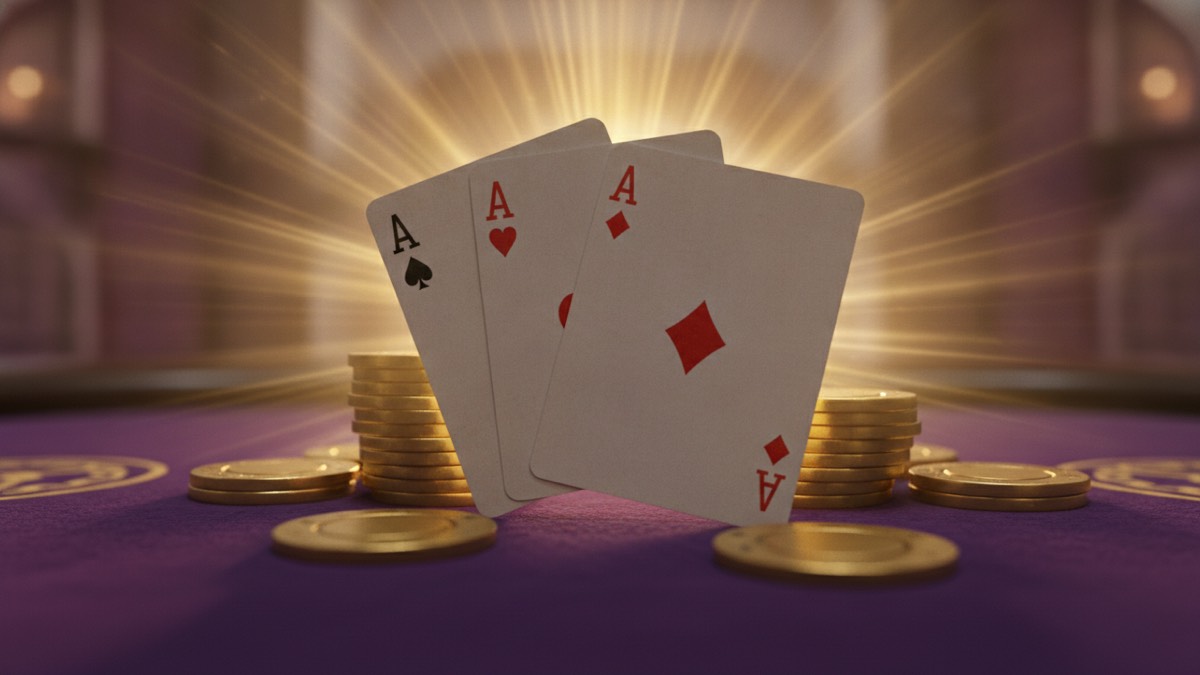
I am Arjun, cloth trader from Jaipur, and I have played Teen Patti for twelve years offline and four online. I thought I had nothing left to learn about hand rankings. Then Udaipur happened.
The Night a Pure Sequence Cost Me ₹380
Two weeks back I was in Udaipur for a fabric buying trip – three days of haggling over block-print cotton. Back in my hotel room around 9:40 pm, dinner done, I opened a ₹25 boot online table to unwind. Forty-odd hands in, I picked up my cards and nearly knocked over my chai: 4♦ 5♦ 6♦. A pure sequence. The second-strongest hand type in the whole game.
I raised. He raised back. I raised again, twice more, fully confident, because in twelve years I had lost with a pure sequence maybe twice. At the show he turned over 6♣ 6♥ 6♠ – a trail of sixes. Pot gone, ₹380 with it, and I sat there staring at the ceiling fan of a Udaipur hotel wondering how a hand that appears roughly once in 460 deals lost to another freak hand at the same small table.
That night taught me the thing this article is really about: knowing the ranking order is step one; knowing how often each rank actually appears is what saves your money. So here is both – the complete Teen Patti hand rankings list, and the exact maths behind every rung.
The Complete Six-Tier Table With Exact Odds
A 52-card deck deals exactly 22,100 possible three-card hands. Every one of them lands in one of six tiers. This is the table I wish someone had shown me in year one:
| Rank | Hand | Example | Exact combinations (out of 22,100) | Approx odds |
|---|---|---|---|---|
| 1 | Trail / Set | 6♣ 6♥ 6♠ | 52 | ≈0.24% |
| 2 | Pure Sequence | 4♦ 5♦ 6♦ | 48 | ≈0.22% |
| 3 | Sequence | 9♥ 10♣ J♦ | 720 | ≈3.26% |
| 4 | Colour | 2♠ 9♠ K♠ | 1,096 | ≈4.96% |
| 5 | Pair | Q♦ Q♣ 7♥ | 3,744 | ≈16.94% |
| 6 | High Card | A♦ 10♣ 5♠ | 16,440 | ≈74.39% |
Read that last row again. Nearly three out of every four hands you are dealt will be plain high card. Keep that number in your head – it explains most of what follows.
Each Rank Explained, From Trail Down to High Card
Trail (Three of a Kind)
Three cards of the same rank – 6-6-6, K-K-K, A-A-A. Three aces is the absolute top of the game; three twos still beats every non-trail hand on earth. The common misjudgment is the one I made in Udaipur: assuming nobody else has one. At a five-player table, a trail shows up somewhere roughly once every 85 rounds. Rare, not mythical.
Pure Sequence (Straight Flush)
Three consecutive cards, all one suit – my 4♦ 5♦ 6♦. It is actually rarer than a trail (48 combinations against 52), yet by tradition it ranks second. Misjudgment to avoid: treating it as unbeatable and pushing the pot to the moon. It loses to exactly one hand type, but as my ₹380 proved, "exactly one" is not "zero".
Sequence (Straight)
Three consecutive cards in mixed suits – 9♥ 10♣ J♦. At about 1 hand in 31, this is the first tier you will actually see with some regularity, and it wins the vast majority of pots it enters. New players often under-bet it because it "doesn't look pretty". It doesn't need to look pretty; it needs to beat colours, pairs and high cards, which it does.
Colour (Flush)
Three cards of one suit, not consecutive – 2♠ 9♠ K♠. Here sits the single most common misjudgment in Teen Patti, and I will give it its own section below, because a colour looks stronger than it is. When two colours clash, compare the highest card, then the second, then the third.
Pair
Two cards of the same rank plus a spare – Q-Q-7. About one hand in six. A pair of aces is genuinely strong at most tables; a pair of fours is a polite request to be taken to a show cheaply. Strength intuition: at a full table, a middling pair usually wins small pots and loses big ones. Bet it firmly, leave it quickly if the raising turns serious.
High Card
Everything else – no pair, no run, no matching suits. Your best card defines you: A-K-J is the strongest possible high card, 5-3-2 the weakest hand in the entire game. The misjudgment here is emotional, not mathematical: an ace on top feels like a real hand. It is not. Any pair at the table beats your ace-high, and someone holds a pair about half the time when four or more players see cards.
Where A-2-3 and A-K-Q Sit on the Ladder
The ace works at both ends of a run, and this trips up even experienced players. Standard rules – and the tables in Teen Patti Master follow them – rank the sequences like this: A-2-3 is the highest sequence of all, one step above A-K-Q, which sits above K-Q-J, then Q-J-10, all the way down to 4-3-2. The same order applies within pure sequences.
Two boundary rules to lock in: first, the ace cannot sit in the middle – K-A-2 and 2-A-K are not sequences, just high-card hands. Second, runs do not wrap around; Q-K-A is simply A-K-Q, there is no "continuing past the ace". If the round structure itself – boot, blind, chaal, show – is still new to you, my full walkthrough of how to play Teen Patti covers the betting flow from the first boot onwards.
Splitting Ties: What Decides When Hands Match
Two players, same hand tier – now what? This second table settles every argument I have witnessed across twelve years of card rooms and family Diwali games:
| Both players hold | How the tie is broken |
|---|---|
| Trail | Higher trio wins: A-A-A beats K-K-K, and 2-2-2 loses to every other trail. |
| Pure Sequence | Higher run wins, using the A-2-3 > A-K-Q > K-Q-J … 4-3-2 order. |
| Sequence | Same order as pure sequences; suits play no part. |
| Colour | Compare top card, then middle, then bottom. A-K-J is the best possible colour. |
| Pair | Higher pair wins. Equal pairs? The third card (kicker) decides. |
| High Card | Compare card by card from the top down. Fully identical values split the pot. |
Note the last line: suits never break a tie. If my 9♥ 10♥ J♥ meets your 9♠ 10♠ J♠, we share the pot.
What the Numbers Should Do to Your Chaal
Here is where the odds column earns its place. Look at the gap between tiers: sequence to colour is a jump from 3.26% to 4.96%, but pair to high card is a chasm – 16.94% to 74.39%. In plain trader's language: most showdowns at any table are high card against high card, or high card against a pair. Which means a humble pair of tens wins far more real money over a month than the trail you are daydreaming about.
The odds also explain my Udaipur disaster properly. A 0.22% hand meeting a 0.24% hand in the same round is roughly a once-in-thousands-of-rounds event. I did not play the hand wrongly – raising with a pure sequence is correct all day. What I did wrongly was emotionally: I had mentally spent the pot before the show, so the loss hit double. मेरा नियम अब भी वही है: session budget पहले, cards बाद में – that night my cap was ₹600, so ₹380 stung but did not wound. If this probability angle interests you, I have broken down the full Teen Patti odds maths separately, with the working shown.
My clear stance: if you cannot recite the six tiers and the A-2-3 rule cold, stay on ₹10–₹25 boot tables. Bigger tables are for players who bet the odds, not just the ladder.
Three Ranking Mistakes I Still See at Every Table
These three cost real rupees, round after round:
- The "colour beats sequence" illusion. Players who learnt poker first carry over flush-beats-straight thinking. In Teen Patti it is reversed: a scruffy 4♥ 5♠ 6♦ sequence beats a shiny A-K-J colour. I watched a man in my Jaipur circle bet three rounds on exactly this confusion and then argue with the table. The table was right.
- Believing a big pair beats a small run. A-A-K feels enormous. It still loses to 4-5-6 of mixed suits. Pairs sit two full tiers below sequences, and no kicker changes that.
- Assuming the ranking order is universal. It is not. In Muflis, the entire ladder flips – the weakest hand wins, so that 5-3-2 becomes a monster and my beloved pure sequence becomes rubbish. Read the Muflis rules guide before you sit at one of those tables, or you will bet your best hands at exactly the wrong moments.
18+ · Play responsibly. Teen Patti is a real-money game for adults, and the odds table above cuts both ways – no hand, not even a trail, arrives on schedule. Fix a spend limit before you deal a single card, treat every rupee staked as entertainment already spent, and log off when the limit or the fun runs out, whichever comes first.
Quick Answers on Rankings
Which is the highest hand in Teen Patti?
Does A-2-3 beat A-K-Q in Teen Patti?
What beats a pair in Teen Patti?
Are suits ranked in Teen Patti?
The table only becomes instinct once you have seen a few hundred hands. Get Teen Patti Master from the download page, start on a ₹10 boot table, and call your hand tier out loud before every chaal until you no longer need to.