 Teen Patti Master
How to Play Teen Patti: Complete Rules from Boot to Show
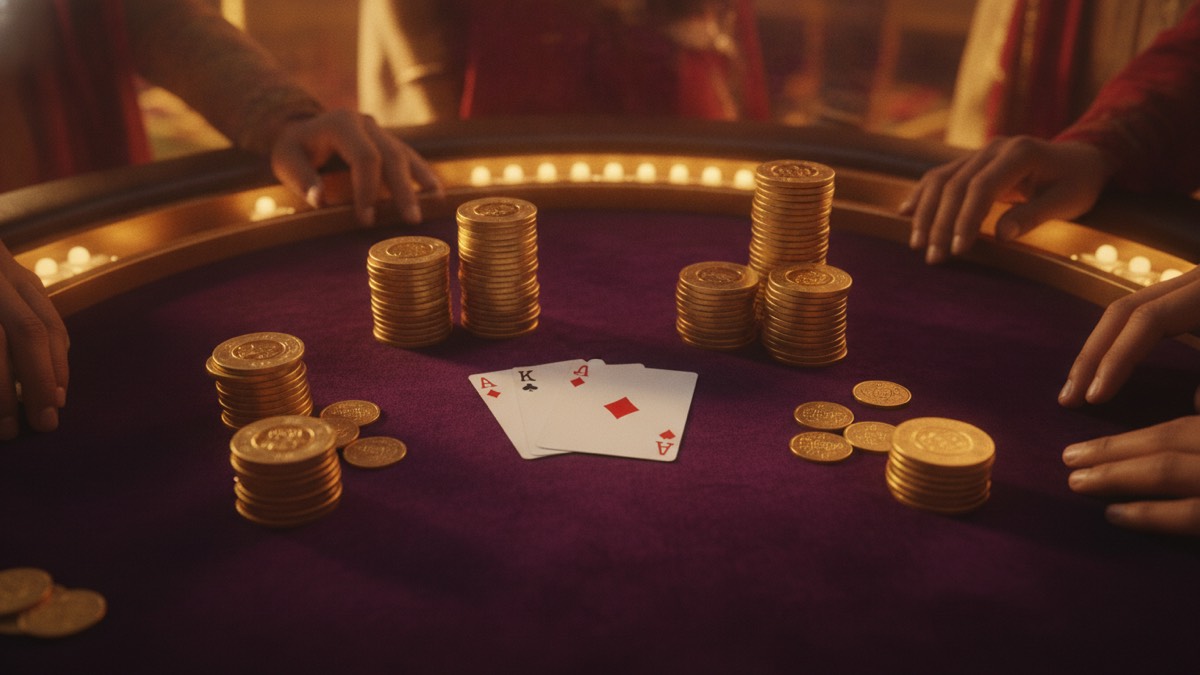
Last Diwali, at my house in Jaipur, my 21-year-old cousin Nikhil sat at a card table for the first time in his life. Five of us played – me, Nikhil, Manoj chacha, Ritu bhabhi and Pooja didi – with a ₹10 boot and a bowl of kaju katli in the middle. By the third hand Nikhil was betting on his own. By the tenth he had taken a ₹430 pot off chacha. That is how fast तीन पत्ती (three cards) can be learned when someone walks you through a real hand instead of reciting rules at you. This is me doing exactly that, in the order I taught Nikhil.
Three Cards Each, One Pot in the Middle: The Setup
Teen Patti uses one standard 52-card deck, no jokers. Anywhere from 3 to 6 players is comfortable; we had 5, which I think is the sweet spot – enough bettors to build a pot, few enough that a hand ends before your chai goes cold.
Before any card moves, every player puts the boot – a small forced stake – into the pot. Ours was ₹10, so every hand started with ₹50 sitting on the table. The dealer then gives each player three cards, face down, one at a time, moving clockwise. Nobody touches their cards yet. That last part matters, and I will explain why in a moment.
The object is simple: win the pot. You do that either by holding the best three-card hand when cards are compared at a show, or – far more often – by being the last player left after everyone else has thrown their cards away.
A 30-Second Ladder of Hand Strength
You need the ranking order in your head before you bet a single rupee. From strongest to weakest: trail (three of a kind), pure sequence (three consecutive cards of one suit), sequence (consecutive, mixed suits), colour (same suit, not consecutive), pair, and high card. Aces sit at the top, and A-2-3 is the best sequence at most tables.
I told Nikhil to memorise just one thing that night: most hands are decided between a pair and a high card. Trails show up rarely – I see maybe one in an evening of family play. If you want the full ladder with tie-breakers and the actual odds of each hand, I have broken it down separately in my Teen Patti hand rankings guide. For tonight, the six-step ladder is enough.
The Half-Stake Rule: Why Blind Players Pay Less
Here is the mechanic that makes Teen Patti a different animal from every other card game: you may bet without looking at your cards. A player who has not peeked is called blind; one who has looked is seen.
The price of information is doubled stakes. Whatever the current blind stake is, a seen player must pay twice that amount to stay in. If the blind stake is ₹10, a blind player calls with ₹10 while a seen player must put ₹20. Raise the blind stake to ₹20 and the seen price becomes ₹40. Once you look at your cards, you are seen for the rest of the hand – there is no going back to the cheap rate.
This creates a real decision every single turn. Staying blind keeps your rounds cheap and hides everything about your hand, but you are flying without instruments. Looking gives you the truth and costs you double. My honest advice for a first-timer is what I told Nikhil: play your first two rounds blind at low stakes. It teaches you to watch the other players instead of staring at your own cards – and the other players are where the money actually is.
Boot, Chaal, Raise, Pack: The Four Moves That Run Every Hand
Betting starts with the player to the dealer's left and moves clockwise. On your turn you have three real options:
- Chaal – continue by matching the current stake: the blind amount if you are blind, double it if you are seen. This is the bread-and-butter move; most turns are a chaal.
- Raise – put in more than the required stake, which lifts the current stake for everyone behind you. A blind player raises by doubling the blind stake; a seen player raises by paying four times the blind stake.
- Pack – fold. Throw your cards in face down, forfeit whatever you have already contributed, and sit out until the next deal. Packing is not weakness; over an evening, the player who packs early and often usually goes home ahead.
The betting keeps looping around the table – there is no fixed number of rounds. It ends only when everyone but one player has packed, or when the last two players settle it with a show or a sideshow. If any of these words feel slippery later, my Teen Patti glossary has every term with a one-line example.
One Full Hand From Our Diwali Table, Move by Move
Rules only click when you see money move. Here is the actual hand where Nikhil won his first pot, reconstructed from that night. Boot ₹10 from all five of us, so the pot opened at ₹50. Manoj chacha dealt; Nikhil, on his left, acted first.
| Round | Player (status) | Action & amount | Pot | Why |
|---|---|---|---|---|
| 1 | Nikhil (blind) | Chaal ₹10 | ₹60 | First hand ever; blind keeps the lesson cheap. |
| 1 | Ritu bhabhi (seen) | Chaal ₹20 | ₹80 | Looked immediately; seen players pay double the blind stake. |
| 1 | Pooja didi (seen) | Pack | ₹80 | Weak high card; ₹20 a round is bad money after it. |
| 1 | Arjun (blind) | Chaal ₹10 | ₹90 | Stayed blind so Nikhil could watch the half-stake maths work. |
| 1 | Manoj chacha (seen) | Raise to ₹40 | ₹130 | Chacha raises light every Diwali; blind stake now ₹20. |
| 2 | Nikhil (blind) | Chaal ₹20 | ₹150 | Still blind, still half price even after the raise. |
| 2 | Ritu bhabhi (seen) | Chaal ₹40 | ₹190 | Her pair of fives was worth one more look around. |
| 2 | Arjun (seen) | Pack | ₹190 | Peeked after the raise: K♠ 8♦ 3♣. Not worth ₹40 a lap. |
| 2 | Manoj chacha (seen) | Chaal ₹40 | ₹230 | Committed to the story his raise started. |
| 3 | Nikhil (seen) | Chaal ₹40, asks chacha for sideshow – refused | ₹270 | Looked at last: 9♥ 9♣ 5♦. Pair of nines, so he pays the seen rate and probes. |
| 3 | Ritu bhabhi (seen) | Chaal ₹40 | ₹310 | Hoping the two of them were bluffing each other. |
| 3 | Manoj chacha (seen) | Chaal ₹40 | ₹350 | Refusing the sideshow kept his cards secret – for now. |
| 4 | Nikhil (seen) | Chaal ₹40 | ₹390 | Pair of nines plays itself against one confident uncle. |
| 4 | Ritu bhabhi (seen) | Pack | ₹390 | Pair of fives shrinks fast between two bettors who will not slow down. |
| 4 | Manoj chacha (seen) | Pays ₹40 for show | ₹430 | Two players left; he pays to force the reveal. |
The show: chacha turned over A♠ Q♦ 7♣ – ace high, a pure Diwali bluff. Nikhil's pair of nines took the ₹430 pot, of which ₹120 was his own money, so he sat back ₹310 richer and grinning like he had invented the game. Notice what the table shows: five players, yet most rows are people paying small, watching, and packing. That rhythm is Teen Patti.
Sideshow, or Compromise: A Private Duel Inside the Hand
You saw Nikhil attempt one above, so here is the rule in full. A sideshow (some families say compromise) is a private comparison between you and the player who bet just before you. The conditions: both of you must be seen, at least one other player must still be in the hand, and you ask only after putting in your chaal.
The other player may accept or refuse. If they accept, you compare cards privately – the weaker hand must pack immediately, and if the hands are equal the asker packs. If they refuse, as chacha did, nothing happens: play simply continues, though most tables cap refusals at two or three per hand.
Why bother? A sideshow lets a medium hand buy certainty cheaply. Nikhil's pair of nines against one specific opponent is a question worth ₹40; the same pair against three unknown hands is a much more expensive guess. And a refusal is information too – chacha turning it down told me he either had a monster or nothing at all. With chacha, it is usually nothing at all.
Who Pays for the Show, and What Happens After
A show can only happen when exactly two players remain. Either of them may demand it, and the demander pays for the privilege: if you are blind, a show costs the current blind stake; if you are seen, it costs twice that – the same seen rate you have been paying all along. The money goes into the pot, both hands are revealed, and the higher hand takes everything. If the two hands are exactly equal in rank and value, the player who did not pay for the show wins – one more small tax on impatience.
A blind player who has never looked holds one extra privilege at this stage: nobody can force them to reveal or pack while they keep paying the blind rate. That is why a disciplined blind player in the last two is so annoying to sit across from – ask Ritu bhabhi, who calls it "betting from behind a curtain".
Once you are steady with all of this, the same skeleton carries you into every variant – AK47, Muflis and Speed all keep the boot-chaal-show structure and just twist which hands win.
Four Habits That Emptied Nikhil's Pocket (and ₹240 of Mine)
Between his wins, Nikhil made every classic beginner error in a single evening, and I contributed one expensive senior-citizen mistake of my own. Watch for these four:
- Looking at your cards the moment they land. Nikhil did this his first three hands. It doubles your price per round instantly and tells the table you are nervous. Earn the look – stay blind for a round or two when the stakes are small.
- Treating any pair like a winning lottery ticket. My own crime that night. I peeked, found 4♦ 4♣ 9♠, and decided a pair must be good at a family table. I had paid the ₹10 boot and three blind chaals of ₹10 before looking, then two seen chaals of ₹20, then called chacha's raise four more times at ₹40. ₹240 in total, fed rupee by rupee into a pot that Ritu bhabhi's colour swallowed whole. A low pair is a packing hand the moment someone raises with conviction.
- Refusing to pack because "I have already put so much in". The money in the pot is not yours anymore. Every chaal is a fresh decision about the next ₹40, not the last ₹200. This is the exact trap I fell into with those fours, twelve years of experience notwithstanding.
- Raising to look brave, not because the maths says so. A raise should mean either a genuinely strong hand or a deliberate, budgeted bluff. Raising because the table went quiet is how 21-year-olds donate pots to their bhabhis.
My stance, for what it is worth: the blind-first, pack-often style I teach suits newcomers and anyone playing low-stake tables. It does not suit impatient players who need action every hand – those friends should sit at bigger online tables where the pace is faster, and accept that discipline still decides who leaves happy.
My House Rules for Playing Within a Budget
18+ · Play responsibly. Teen Patti is played with real money and real money can be lost – my ₹240 lesson above was cheap only because our boot was ₹10. Before the first card at my table, everyone names a number they are prepared to lose entirely; when it is gone, they deal for the others and drink chai. मेरा नियम: session budget पहले, cards बाद में. The same applies online – decide the amount before you open the app, never chase a losing session with a "last" deposit, and stop while stopping is still your own idea. If the game ever stops feeling like Diwali entertainment, take a long break from it. Only adults 18 and over should play.
Questions Nikhil Asked Me That Night
How many players do you need for Teen Patti?
Can I play Teen Patti with 2 players?
What is the boot amount in Teen Patti?
How long does one round of Teen Patti take?
Nikhil now messages me hand histories at midnight, which I suppose is my own fault. If you have no patient cousin with a card table, the app version teaches the same rhythm: install Teen Patti Master (V5.1, a 93 MB download for Android 5.0+), start on the smallest boot available, and play a hundred hands the way I taught him – blind first, pack often, budget before cards.