 Teen Patti Master
Teen Patti Bluffing and Blind Play: The Checklist Behind My Nickname
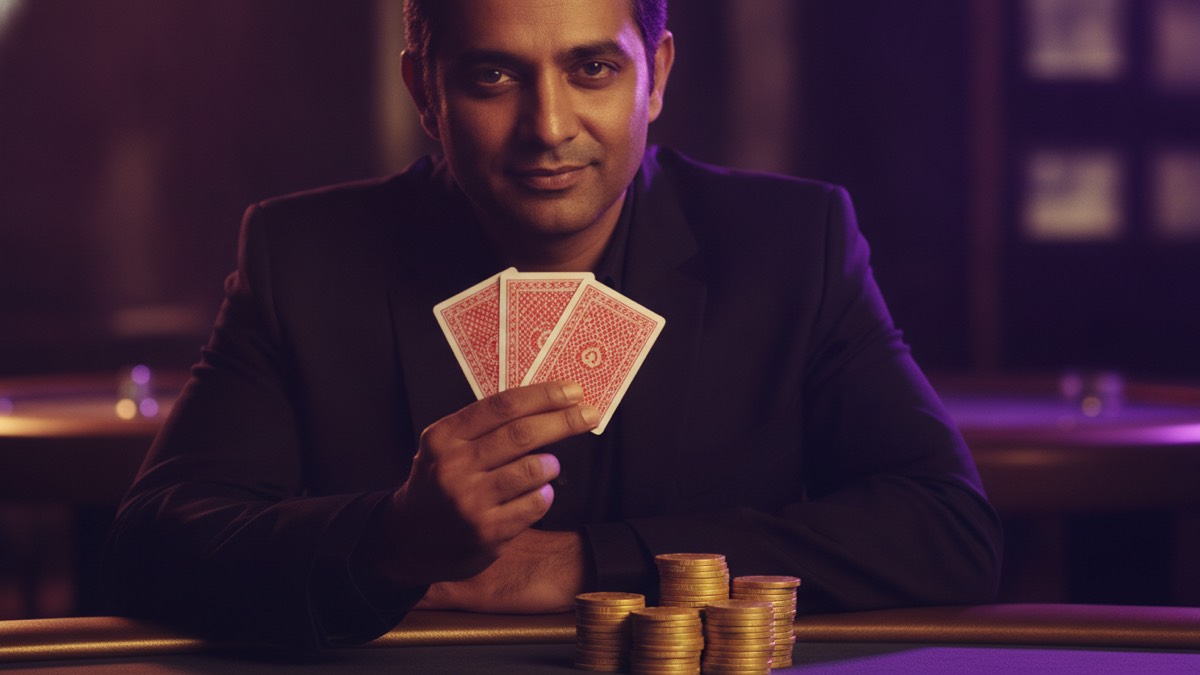
My full name is Arjun Sharma. At three card tables in Jaipur and in one noisy WhatsApp group, I am simply "Bluff". This is the story of how I earned that name ten years ago, how it turned into a scar one month later, and the five-point checklist I now run before firing a single bluff online.
Why a Teen Patti Bluff Is Nothing Like a Poker Bluff
Poker players who visit my table always over-rate themselves. In poker you bluff a story – flop, turn, river, a line of bets writing a believable novel. Teen Patti gives you none of that machinery: no community cards, no draws, no streets. Three cards go face down and that is the entire plot.
Information is thinner on both sides: fewer clues to catch you, fewer tools to tell a story. All you own is betting tempo, raise sizing, sideshow behaviour and your history at that table. In poker you bluff a narrative; in Teen Patti you bluff a temperament.
The Cheapest Bluff on Sale: Raising Blind
Under standard rules a blind player bets at half the rate of a seen player – where a seen player pays ₹8, the blind player pays ₹4 for the same aggression. (Betting flow and sideshow mechanics: see my how to play Teen Patti walkthrough.)
Read that as a psychologist, not an accountant. A blind raise announces: I have not even looked and I still want your money. It cannot be about the cards, so it reads as pure nerve – and you buy that pressure at half price. Two blind raises in a row fold a seen player's small pair more often than you would believe – his ₹16 keeps chasing your ₹8 into a fog. Blind play strategy in one line: stay blind longer than feels comfortable, and let the discount do the intimidating.
Three Pots Off Uncle Prakash: The Night I Became "Bluff"
Ten years ago, in my uncle's haveli in Jaipur's old city, our family sat for its usual Saturday game. I was twenty-two and had decided – secretly, foolishly, wonderfully – to raise at nearly every opportunity and watch what happened.
What happened was my uncle Prakash, a careful man who checks a fabric bale three times before buying and plays cards the same way. Three times that night he built a decent pot with a genuine hand, and three times I raised him off it holding nothing worth describing. When he packed the third time and I flipped my rubbish face up, the table erupted, and my cousin christened me "Bluff" Sharma on the spot.
The medal lasted one month. Same room, same players, and this time Uncle Prakash had done his accounting. Nobody folded to me all night; every raise got called, and I handed back ₹230 in a single sitting – more than the famous night had won me.
My Five-Point Bluff Timing Checklist
I no longer bluff on instinct. I bluff when a hand passes five gates, each with a reason:
- Two or fewer opponents remain. Why: every extra player is another chance somebody holds a pair that calls anything. A bluff into four players is a donation.
- Most of them are still blind. Why: a blind player has no card information to anchor a call, and looking converts him to doubled stakes. Under sustained raises his cheapest exit is the pack button.
- The pot is still small. Why: nobody fights over loose change, but once a pot grows fat players feel invested and pay to see the end. Steal early or not at all.
- Your recent image is tight. Why: a bluff sells your history, not your cards. Pack eight of the last ten hands and your sudden raise reads as honest strength; raise three hands running and it reads as noise.
- The table is not the lowest boot tier. Why: my notebook says so, in numbers, and the next section shows them.
Four gates out of five is not a pass. मेरा नियम सीधा है: पाँच में से पाँच, वरना pack – five of five, or fold.
What 140 Logged Bluffs Taught Me About Stakes
I keep a hand log – a habit from the shop ledger – and over two years it has recorded 140 deliberate bluffs online. Treat the split as one trader's personal statistics, not a law of nature:
| Table tier | Bluffs logged | Won without a show | My success rate |
|---|---|---|---|
| ₹5–₹10 boot | 86 | 29 | ≈34% (about 1 in 3) |
| ₹25–₹50 boot | 54 | 31 | ≈57% |
The low-stakes number is the lesson. At a ₹5 or ₹10 boot table, calling you costs less than a plate of kachori, so players call – not because they read you, but because folding feels sillier than losing ₹6. At ₹25–₹50 boots, folding protects money people actually feel, and the same moves suddenly work. So, opposite to beginner instinct: the cheaper the table, the less you should bluff. Low-boot tables are for hand reading and discipline – the wider framework sits in my Teen Patti winning strategy guide – not for theatre.
The ₹120 Pot I Stole With an 8-High
One from the log. A ₹10 boot table online, six players, and I am dealt 8♠ 5♦ 2♣ – an 8-high, near the worst holding the game prints. I had packed most of the previous stretch, so my image was tight. By the second betting round only two opponents remained, both still blind, the pot still small. Five gates, five green lights.
I raised. Both called blind. I raised again; one packed. I raised a third time, and the last man – still blind, staring at rising numbers with zero information – let it go. ₹120, won by the worst hand at the table, and nobody ever saw a card. That is the whole trick. It also works a handful of times a night at best; run it every third hand and you become the Arjun of month two.
Refusing the Sideshow: A Bluff Inside a Bluff
The sideshow – a private card comparison one seen player can request from another – hides a weapon most players never draw: the right to refuse. A player requesting a sideshow usually holds a middling hand and wants to resolve his doubt cheaply. Decline, and the doubt compounds; your refusal reads as "my cards do not need comparing".
I refuse roughly two of three requests regardless of my hand, so my refusal carries no signal – accept when strong, refuse when weak, and sharp players decode you within twenty hands.
Caught Once? How I Rebuild My Table Image
Sooner or later a bluff gets looked up and the table smiles. Do not leave, and do not fire back – getting caught is not the disaster, staying caught is. My reset is boring on purpose: ten to fifteen hands of only genuine cards, everything marginal packed, any strong winning hand shown. Online memory is short; ten tight hands rewrites you from "the bluffer" back to "the rock". डर दिखा तो पत्ते हार गए – show fear and the cards have already lost.
The Itch That Turned My Medal Into a Scar
Now the deepest pit in this subject: bluffing is addictive in a way honest wins are not. A pot won at show feels like wages; a pot stolen with an 8-high feels like magic, and your brain files it under "repeat immediately". That itch is month two at Uncle Prakash's table – I was no longer bluffing because a spot was right, only to feel the trick land again. The table saw it before I did, and the ₹230 was the tuition fee.
So hold my actual position: bluff is the seasoning, never the main dish. A tight, boring game wins the month; bluffing wins the occasional pot and stops observant players reading your raises like a printed price list. The moment you notice you are itching to bluff rather than choosing to, stand up.
Who Should Skip Bluffing Altogether
Honest gatekeeping: skip bluffing for now if you still pause over terms like chaal, seen and pack (spend an evening with the Teen Patti terms glossary first); if you play only ₹5 boot tables, where my numbers say two of three bluffs die; if you tilt after losses, because a failed bluff stings double; or if you do not track results – an unlogged bluffer is guessing at his own success rate. No shame on that list – a disciplined player who never bluffs beats a careless bluffer every month.
18+ only, and keep the game smaller than your life. Bluffed pots are still gambled money, and stolen pots return to the table just as fast. Before your first hand, write down one number you can lose without a second thought tomorrow – when it is gone, or the fun is, close the app. No nickname is worth chasing.
Straight Answers on Bluffing and Blind Play
How often should you bluff in Teen Patti?
Does bluffing work at low-stakes Teen Patti tables?
What is the best position to bluff from in Teen Patti?
Can you bluff while playing blind in Teen Patti?
The checklist becomes reflex only against live opponents. Install Teen Patti Master from the download page, sit at a ₹10 boot table, and score twenty bluff spots against the five gates before you risk one.